
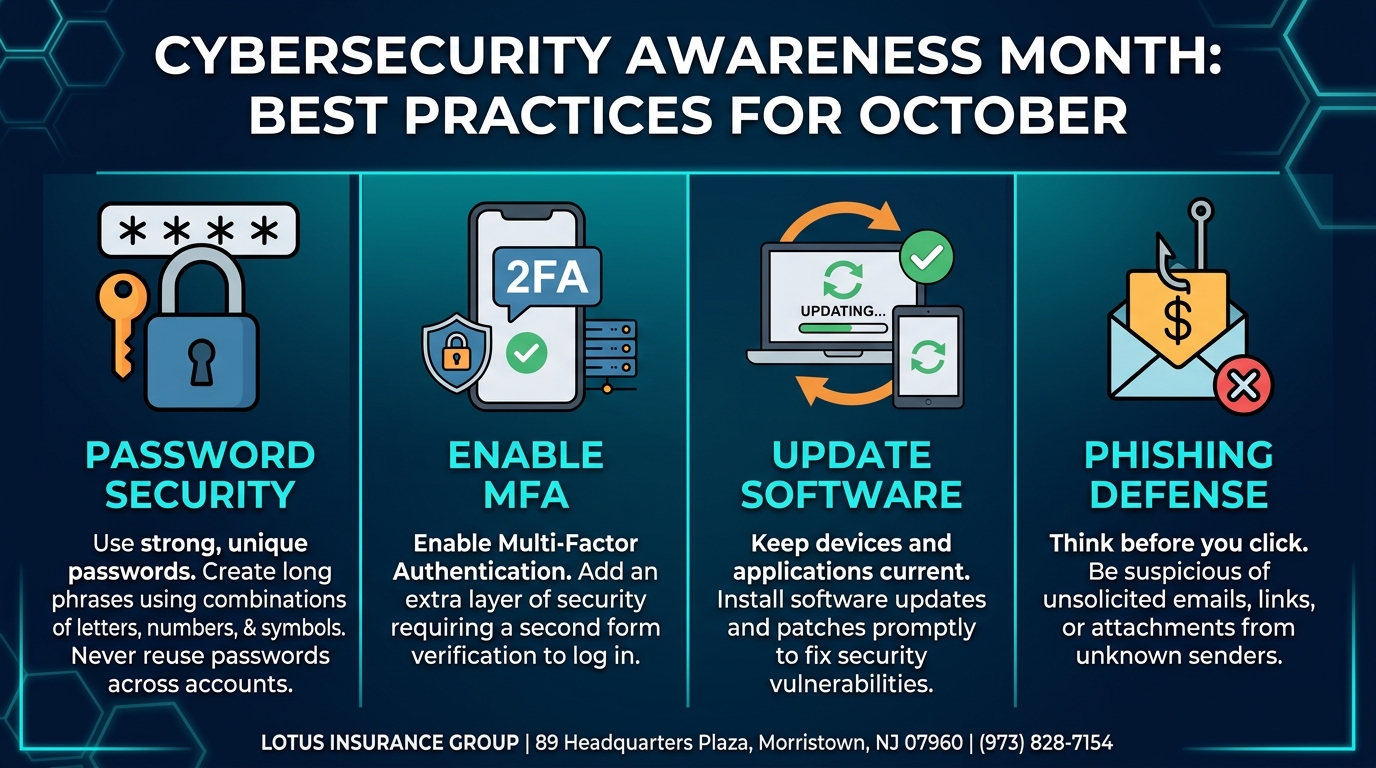
Cybersecurity Awareness Month - Best Practices - October
Cyber threats can affect organizations of every size, not only large corporations. Whether your business uses technology to manage customer data, accept payments, communicate with staff, or keep daily work moving, protecting those systems should be an important part of your overall business insurance strategy.
Cybersecurity Awareness Month is a timely reminder to review the habits and safeguards that help reduce digital risk. Many effective improvements do not require a major technology investment. Consistent employee awareness, practical procedures, and the right cyber liability coverage can help your business prepare for the unexpected.
Help Your Team Spot Cyber Risks
A single everyday mistake can lead to a significant cyber incident. A realistic phishing message, an unfamiliar attachment, or a fraudulent sign-in page may persuade even a careful employee to share credentials or provide access to sensitive information.
Regular training can help employees recognize suspicious messages, questionable links, unexpected requests for private information, and other warning signs. It is also important to create an environment where people feel comfortable reporting something unusual promptly. Early reporting can help contain a problem before it affects more of the business.
Control Access to Important Business Systems
Strong cybersecurity starts with knowing who can access your accounts and systems. Multi-factor authentication, often called MFA, adds another layer of protection by requiring a second verification step, such as a code, authentication app, or biometric approval.
MFA is particularly helpful for email, payroll systems, cloud applications, online banking, customer databases, and other platforms holding sensitive information. If a password is exposed, that additional verification step may still prevent an unauthorized person from entering the account.
Access permissions should also be reviewed on a regular basis. Employees should have access only to the data and systems needed for their responsibilities. When someone changes roles or leaves the company, update or remove access as soon as possible to limit unnecessary exposure.
Update Software, Secure Devices, and Use Strong Passwords
Cybercriminals frequently target outdated software because known weaknesses may be easier to exploit. Keep operating systems, business applications, antivirus tools, firewalls, and connected devices current with the latest security updates. Enabling automatic updates whenever practical can help prevent important patches from being missed.
Password habits matter, too. Each account should have its own long, complex password rather than reusing the same password across multiple platforms. A password manager can securely generate and store unique passwords, making it easier for employees to follow good security practices without trying to remember every credential.
Do not overlook laptops, phones, tablets, and portable storage devices. These tools may store or connect to valuable company information. Password or biometric protection, encryption when available, and remote-wipe capabilities can reduce the impact of a lost or stolen device. Employees should also know exactly whom to contact if company equipment goes missing.
Identify the Information That Needs Protection
Before selecting security measures, take stock of the data your organization collects, stores, and uses. A straightforward risk assessment can help identify the information and systems that deserve the highest level of attention.
Consider questions such as:
- What types of information does our business collect and retain?
- Where is that information stored or accessed?
- Which employees, vendors, or partners can view it?
- What would happen if the information were lost, stolen, encrypted, or shared by mistake?
Your review may include customer records, employee data, payment information, contracts, internal documents, pricing details, and the systems that support daily operations. Once you understand what is at risk, it becomes easier to prioritize sensible protections for your business.
Review Vendors, AI Use, and Internal Security Policies
Many businesses depend on outside providers for payroll, accounting, payment processing, marketing, cloud storage, and IT support. Because those vendors may need access to company information, understand what data they use, how they protect it, and whether their access can be limited. When a vendor relationship ends, remove access promptly.
Your security policies should also match the way your employees work. Clear guidance is especially important when a team uses remote access, cloud-based tools, mobile devices, shared drives, or artificial intelligence platforms. Employees need to understand what is appropriate to share and how sensitive business information should be handled.
AI tools deserve thoughtful oversight as they become more common in daily work. They may help draft emails, organize details, or summarize documents, but confidential customer information, financial records, employee data, and sensitive business documents should be handled carefully. Assigning responsibility for reviewing AI-related risks can help ensure these tools are used appropriately.
Plan for Recovery Before a Problem Occurs
Even businesses with strong cybersecurity practices cannot eliminate every cyber risk. Preparation for recovery is just as important as prevention.
Dependable backups can help your organization restore files after accidental deletion, ransomware, encryption, or another compromise. Automated backups and at least one backup kept separate from the primary network can offer added protection when systems cannot be accessed.
Every company should also maintain a clear incident-response plan. Employees should know what to do and whom to notify if they encounter phishing, ransomware, unusual account activity, a missing device, or accidental data sharing. A prepared response can reduce confusion in a stressful situation and help limit further damage.
How Cyber Insurance Supports Your Security Strategy
Employee training, access controls, software updates, secure devices, backups, and internal policies can all reduce cyber risk. Still, a cyber incident can affect even a well-prepared organization.
Cyber liability insurance can complement your preventive measures by helping with certain costs following a covered event. Depending on the coverage, this may include expenses connected with data breaches, business interruption, legal exposure, notification obligations, and recovery assistance.
At Lotus Insurance Group, we help businesses in Morristown and throughout New Jersey review cyber liability coverage as part of a tailored commercial insurance approach. As an independent insurance agency, we work with multiple carriers to help clients consider coverage packages that align with their operations, exposures, and overall business insurance needs.
Cybersecurity planning and insurance planning work best together. Lotus Insurance Group can help you review your current coverage, identify potential gaps, and better understand your cyber insurance options. If a covered cyber incident occurs, our team is also committed to the responsive insurance claims advocacy that helps clients navigate the process with greater confidence.
FAQ
Why does a small business need cybersecurity practices?
Businesses of every size may collect customer information, process payments, use email, store files, and rely on online systems. Those activities can create cyber exposures, making practical security habits important regardless of company size.
What is multi-factor authentication?
Multi-factor authentication requires more than a password to sign in. A user may also need to enter a code, approve a request through an authentication app, or use biometric verification. This added step can help protect an account if its password is compromised.
What should employees do if they receive a suspicious email?
They should avoid clicking links, downloading attachments, or sharing information. They should report the message through the business's established process so it can be reviewed quickly.
Can cyber insurance replace cybersecurity measures?
No. Cyber insurance is designed to support a broader risk-management strategy, not replace security practices. Training, access controls, software updates, backups, and response planning remain important protections.
How can Lotus Insurance Group help with cyber coverage?
Lotus Insurance Group provides personalized guidance for commercial insurance and personal insurance needs in Morristown, New Jersey. We can help you evaluate cyber liability coverage alongside the other protections that matter to your business and build a tailored insurance plan with confidence.